By Dr. Brian R. Patterson
In an era of constant emails, deadlines, and distractions, eƯective time management is no longer optional—it is essential. One of the most enduring and practical frameworks for prioritizing work is the Eisenhower Matrix, a simple yet powerful decision-making tool that helps individuals focus on what truly matters rather than reacting to everything that demands attention.
The History of the Eisenhower Matrix
The Eisenhower Matrix is inspired by Dwight D. Eisenhower, the 34th President of the United States and a five-star general in the U.S. Army. Eisenhower was known for his extraordinary ability to manage complex responsibilities, from leading Allied forces during World War II to governing a nation during the Cold War.
Eisenhower famously distinguished between urgent and important tasks, noting:
“What is important is seldom urgent and what is urgent is seldom important.”
This principle was later formalized into a four-quadrant framework by leadership experts and popularized in modern productivity literature, including Stephen Covey’s The 7 Habits of Highly EƯective People. Today, the Eisenhower Matrix is widely used in business, education, project management, and personal productivity.
How the Eisenhower Matrix Works
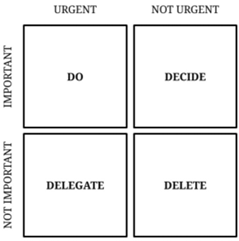
The Eisenhower Matrix organizes tasks into four quadrants based on urgency and importance:
Quadrant 1: Urgent and Important — Do First
These tasks require immediate attention and have serious consequences if ignored. x Examples: looming deadlines, emergencies, crises, last-minute deliverables Quadrant 2: Important but Not Urgent — Schedule
These tasks contribute to long-term success and personal growth but do not demand immediate action. x Examples: strategic planning, studying, relationship-building, skill development, exercise
Quadrant 3: Urgent but Not Important — Delegate
These tasks feel pressing but do not significantly advance your goals. x Examples: interruptions, unnecessary meetings, routine emails, some phone calls
Quadrant 4: Not Urgent and Not Important — Eliminate
These activities consume time without providing meaningful value. x Examples: excessive social media scrolling, busywork, distractions, time-wasting habits
Why the Eisenhower Matrix Is EƯective 1. It Clarifies Priorities
The matrix forces individuals to distinguish between what feels urgent and what actually matters. This clarity prevents reactive decision-making and reduces stress.
2. It Encourages Proactive Thinking
By emphasizing Quadrant 2 activities, the tool helps people invest time in prevention, preparation, and growth—reducing future crises and last-minute pressure.
3. It Reduces Overwhelm
Rather than managing an endless to-do list, the matrix provides a structured framework that makes tasks feel manageable and intentional.
4. It Improves Decision-Making
The Eisenhower Matrix acts as a filter, helping users decide whether to act, plan, delegate, or eliminate tasks altogether.
5. It Builds Better Habits
Consistent use trains individuals to value long-term impact over short-term urgency, leading to sustained productivity and improved performance.
When and Where the Eisenhower Matrix Should Be Used
The Eisenhower Matrix is especially eƯective in the following scenarios:
Academic Settings
Students can use the matrix to balance assignments, test preparation, extracurricular activities, and personal commitments—reducing procrastination and burnout.
Workplace and Leadership Roles
Professionals and managers can prioritize high-impact work, reduce unnecessary meetings, and delegate low-value tasks more eƯectively.
Project Management
Teams can identify critical deliverables, prevent bottlenecks, and focus resources on tasks that drive project success.
Personal Life Management
The matrix helps individuals align daily activities with long-term goals related to health, finances, relationships, and personal development.
High-Pressure or High-Responsibility Roles
Executives, educators, healthcare professionals, and entrepreneurs can use the tool to maintain focus amid competing demands.
Summary
The Eisenhower Matrix endures because it addresses a universal challenge: deciding what deserves our time and attention. By separating urgency from importance, the tool empowers individuals to work with intention, reduce stress, and focus on what truly drives success.
Whether used in a classroom, boardroom, or personal planner, the Eisenhower Matrix is more than a time management tool—it is a mindset shift that transforms how people approach work, priorities, and life itself.
Additional Resources